Modern digitalization unlocks countless opportunities. Yet it also broadens the environment for cyberattacks, which can affect anyone, from individuals to entire corporations. According to various studies (including reports by the FBI’s Internet Crime Complaint Center), cybercriminals continually refine their tactics to exploit vulnerabilities, both technological and human. Below, we’ll explore the most common cyberthreats and offer actionable cybersecurity for business strategies to protect yourself and your organization.
- Key Components of Information Security
- Ransomware
- Phishing
- Man-in-the-Browser (MitB) Attacks
- Keylogger Bots
- Vishing
- Social Engineering
- Password Hacking
- Invoice Redirection Fraud
- Smishing
- In-Depth Look at Specific Threats
- Phishing
- How to Spot Phishing Attempts
- What to Do If You Suspect Phishing
- Ransomware
- How to Protect Yourself
- Social Engineering
- Why Is This Dangerous?
- Recognizing Social Engineering
- How Attackers Pressure You
- How to Protect Yourself
- Password Hacking
- Potential Impact
- Protecting Yourself
- Invoice Redirection Fraud
- Why It’s Dangerous
- Protective Measures
- Practical Cybersecurity for Business: Security Tips
- Protect Confidential Information
- Safeguard Your Email
- Build a “Human Firewall”
- Secure Your Computer
- Reduce the Risk of Payment Errors
- Final Thoughts
- References
- Frequently Asked Questions
- Which cyber threats are most dangerous for businesses?
- How much does a cyberattack cost a company?
- Where should a business start protecting itself?
- Does a small business need a cybersecurity specialist?
- How do you train staff in cybersecurity?
- What are the cybersecurity regulations in the UAE?
- Need a consultation?
Key Components of Information Security
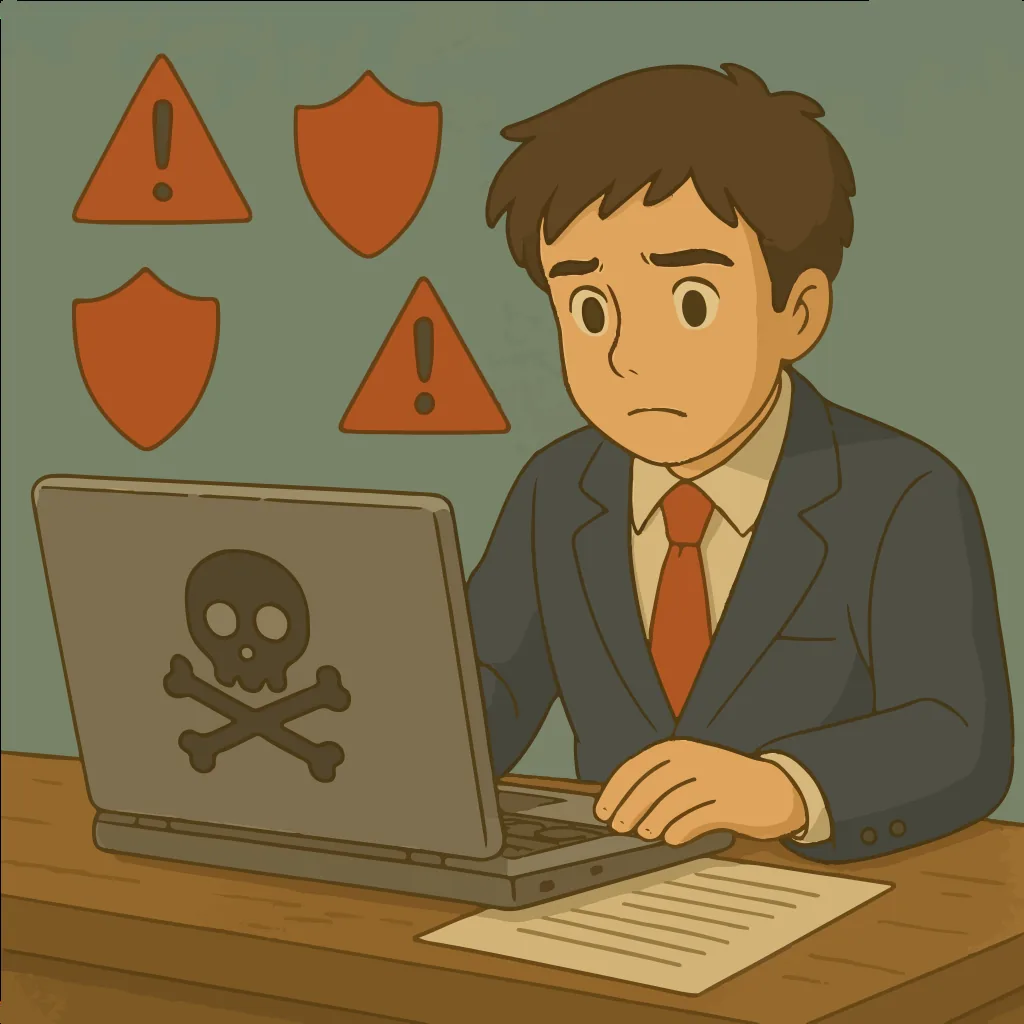
Before diving deeper, it’s important to understand the principal types of cyberthreats. Many of these are referenced in international standards like ISO 27001 and recommendations by the U.S. Cybersecurity and Infrastructure Security Agency (CISA). Awareness of these threats is the first line of defense.
Ransomware
Ransomware is malicious software (malware) designed to encrypt files or lock entire computer systems. Attackers then demand a ransom payment, often in cryptocurrency, to restore access. One infamous example is the “Locky” cryptotrojan, although many variants exist today.
Phishing
Phishing schemes manipulate users into disclosing sensitive information (usernames, passwords, financial details) through deceptive emails or fraudulent websites. They often impersonate trusted institutions such as banks, government agencies, or well-known corporations.
Man-in-the-Browser (MitB) Attacks
In these attacks, a trojan infects a web browser and intercepts data exchanged between a user and a legitimate online service. The attacker can alter or steal information in real time, bypassing typical security measures like HTTPS encryption.
Keylogger Bots
These programs record keystrokes to capture login details and other sensitive data. Often they are installed discreetly when a user clicks a harmful link or opens a malicious attachment.
Vishing
Vishing uses automated calling systems to dial large batches of phone numbers. Once a call is answered, a recorded message claims, for instance, that the user’s bank account or credit card is at risk and requests personal information, PINs, card numbers, or login credentials.
Social Engineering
Social engineering manipulates people into revealing confidential data, such as names, contact details, job titles, or even corporate secrets, through persuasive tactics. Criminals exploit trust and human tendencies to assist, comply, or follow authority in order to gain unauthorized access.
Password Hacking
Password hacking involves illegally obtaining passwords for devices or applications. Once a cybercriminal has a valid set of credentials, they can compromise email, online banking, or corporate systems, often leading to large-scale data breaches.
Invoice Redirection Fraud
Here, cybercriminals gain access to legitimate billing and payment details, such as account numbers or vendor information, and then trick victims into sending money to fraudulent accounts. These attacks can remain undetected until a legitimate vendor issues a payment reminder.
Smishing
Smishing is similar to phishing but is carried out via SMS. Attackers send text messages crafted to look legitimate, urging the recipient to share private data or click malicious links.
In-Depth Look at Specific Threats
Some attacks warrant a closer examination. Below are the methods you’re most likely to encounter and how to recognize them early. Learn more: financial management risk management.
Phishing
Phishing entails sending emails (or directing users to manipulated websites) that request personal details, such as usernames, passwords, or credit card numbers. Phishers often exploit urgent or alarming language to provoke a quick, careless response. The Federal Trade Commission (FTC) offers complete guidelines on recognizing and reporting phishing.
Spear Phishing, a more targeted version, focuses on specific individuals, such as CEOs or CFOs. Attackers use personal information, correct names, job titles, or insider details, to appear genuine, increasing the likelihood of success.
How to Spot Phishing Attempts
- Sender Verification
- Does the sender claim to be from a reputable institution, but use a generic webmail address (e.g.,
HSBC@hotmail.com)?
- Link Inspection
- Check for typos or subtle domain variations (e.g.,
www.deutschbank.deinstead of the legitimatewww.deutschebank.de).
- Email Quality
- Be alert to grammatical or spelling mistakes. Poorly replicated logos or inconsistent branding are also warning signs.
- Content Discrepancies
- If the email claims you’ve won a contest or warns of a dire threat that seems unfounded, be suspicious.
- Requests for Personal Data
- Reputable banks or businesses seldom ask you to provide passwords or financial information via email.
- Money Transfer Requests
- A request for immediate payment, especially to unfamiliar details, is a major red flag. Even if the sender is known to you, confirm by phone or a separate email channel.
What to Do If You Suspect Phishing
- Never Click Suspicious Links
Avoid clicking links in questionable emails. Malicious attachments or embedded links can infect your system with malware. - Don’t Open Attachments
If you’re not expecting a file, regardless of its type, do not open it. - Delete Obvious Phishing Emails
If the phishing attempt is generic and not addressed personally to you, simply delete it. - Report Personalized Phishing (Especially From a Large Bank)
If you receive an email explicitly referencing your name and claiming to be from a major financial institution, inform your client relationship manager or the bank’s fraud department immediately.
Ransomware
Ransomware is designed to lock or encrypt files and systems. Criminals demand payment in exchange for restoring access. According to the FBI and CISA, ransomware is one of the fastest-growing cyberthreats.
- Cryptotrojan
Encrypts files so that users cannot access them. Criminals then demand a ransom, promising a decryption key. - Screen-Lock Trojans
Do not encrypt files but prevent the user from interacting with the computer by covering the screen with a ransom demand.
How to Protect Yourself
- Verify Source Authenticity
Only open emails or download files from trusted senders and websites. - Regular Backups
Maintain secure backups of essential data, preferably in offline or cloud storage with strong encryption. - Keep Systems Updated
Install security patches and updates promptly to close known vulnerabilities. - Limit Network Connections
Disconnect devices from Wi-Fi if not in use, reducing potential entry points for attackers. - Use Official Accessories
Charge and connect devices only with original or validated accessories to avoid hardware-based exploits.
Social Engineering
Social engineering leverages human psychology, trust, helpfulness, or urgency, to extract confidential information. Common real-world examples include impersonating colleagues or referencing details from social media profiles to gain credibility.
Why Is This Dangerous?
People are often the weakest link in the security chain. Cybercriminals use everyday human characteristics, like empathy or a desire to assist, to obtain sensitive data. This requires little technical skill, making social engineering a favored tactic among attackers.
Recognizing Social Engineering
- Information Requested
Names, contact details, department structures, and job titles. While seemingly harmless, these details can be the stepping stones to larger breaches. - Common Tactics
- Persuasion: A fraudulent caller claiming to be from IT might request “verification details.”
- Flattery or Urgency: “I’m in a crisis; can you help me quickly?”
- Impersonation: Posing as a colleague, vendor, or partner to gain trust.
- Contact Methods
Phone calls, emails, or in-person conversations (e.g., at a conference or lobby area). Attackers often choose live interactions for added pressure.
How Attackers Pressure You
- High Stakes
“We need this information immediately to handle an emergency situation.” - Time Constraints
“I only have a few minutes before my flight departs.” - Appeals to Empathy
“I’m locked out of the system and under a deadline.”
How to Protect Yourself
Use the OPS Strategy:
- O – Opt Out
- If you doubt the caller’s identity, don’t share any details.
- Resist pressure; end the conversation if something feels off.
- P – Probe
- Ask for official documents or request the information in writing.
- If they claim to have your email, instruct them to use it, never provide it directly if you’re suspicious.
- S – Share (Internally)
- If the caller claims to be from your bank, for instance, immediately inform your relationship manager or bank security contact.
- Timely reports help security teams activate countermeasures.
Password Hacking
Password hacking involves unauthorized access to login credentials. Once compromised, attackers can exploit everything from personal email to corporate networks.
Potential Impact
- Online Banking
Fraudsters might siphon funds or monitor transactions. - Workplace Systems
Confidential business data can be stolen or manipulated. - Email Accounts
Attackers can send spam or phishing messages impersonating you. - E-Commerce Sites
Unauthorized purchases may be made in your name. - Social Media
Harmful or defamatory content could be posted.
Protecting Yourself
- Unique Passwords
Avoid reusing passwords across multiple services. Critical accounts (banking, work email) should each have distinct, complex passwords. - Regular Updates
Change passwords periodically and immediately if you suspect a breach. - Never Share
Treat passwords like personal property, never disclose them, even to IT staff (they should not need your actual password). - Don’t Store Passwords Carelessly
Never write them down in accessible places (like sticky notes on your desk) or store them in unprotected files. - Use Strong Formats
Passwords should be at least 8–12 characters long, combining uppercase and lowercase letters, numbers, and special symbols (e.g.,ChildName2010$, though avoid anything directly traceable to you). - Two-Factor Authentication (2FA)
Whenever possible, enable 2FA. This typically means verifying your identity with something you know (a password) and something you have (an authentication app or phone). - Password Managers
Use reputable password management tools (e.g., those compliant with SOC 2 or recommended by NIST) to secure and organize your credentials.
Invoice Redirection Fraud
Attackers intercept genuine payment details, often through corporate email compromise, and instruct payers to reroute funds to fraudulent accounts. This can remain undetected until a legitimate supplier sends an overdue notice.
Why It’s Dangerous
Significant sums can be lost before anyone realizes something is wrong. By the time the fraud is discovered, retrieving the funds can be extremely difficult or even impossible.
Protective Measures
- Regularly Verify Account Changes
Maintain a “whitelist” of trusted payment details. - Use the Two-Check Principle
Require at least two people to confirm any changes in banking information. - Cross-Confirm
If a vendor requests an update to payment details, contact them independently (using pre-existing contact info) for confirmation. - Send Payment Notifications
Alert the intended recipient each time a payment is made, so any discrepancy is quickly spotted. - Limit Public Disclosure
Avoid publishing your vendors’ or clients’ data, criminals often mine public sources for such information.
Practical Cybersecurity for Business: Security Tips
To build strong cybersecurity for business, you need a multi-layered approach involving technology, policy, and user awareness. This aligns with the best practices described in the NIST Cybersecurity Framework and ISO/IEC 27002 guidelines.
Turning these layers into a working system, from perimeter and device control to monitoring and incident rehearsal, is what my information security service covers.
Protect Confidential Information
- Clean Desk Policy
Keep documents out of sight. This reduces the risk of unauthorized access by visitors or employees who lack the proper clearance. - Data Classification
Label documents properly (e.g., “Confidential,” “Internal Use Only”) so employees handle them with the correct level of caution.
Safeguard Your Email
- Eliminate Spam Immediately
Don’t open attachments or click links from unknown sources. - Use “Forward,” Not “Reply”
Re-enter the email address manually to ensure you’re sending sensitive data to the correct recipient. - Verify Urgent Requests
If an email demands immediate action, confirm via another communication channel before you respond.
Build a “Human Firewall”
- Employee Training
Conduct regular cybersecurity awareness sessions and workshops. - Up-to-Date Bulletins
Send periodic newsletters showing new threats and protection methods. - Phishing Drills
Test your staff with controlled phishing simulations to reinforce caution.
Secure Your Computer
- Avoid Unverified Downloads
Refrain from installing software or opening files from unknown sources or untrusted USB drives. - Use Modern Anti-Malware
Keep antivirus and anti-spyware tools updated to the latest versions. - Max Security Macros
In programs like Microsoft Office, set macro security to the highest practical level. - Dedicated Payment Systems
If possible, use a separate computer or secure terminal for financial transactions. - Password Hygiene
Regularly change passwords, don’t reuse them across platforms, and close or remove dormant accounts.
Reduce the Risk of Payment Errors
- Dual Authorization
For payments above a certain threshold, require two separate approvals. - Two-Factor Payment Approval
Deploy 2FA for transaction confirmations and verify large sums via phone or SMS. - Daily Reconciliation
Check outgoing payments daily so any suspicious transaction is flagged immediately. - Set Threshold Controls
Configure your systems to warn you when a payment exceeds a normal range. - Whitelist Known Bank Accounts
Maintain a list of verified recipients and raise alerts for any deviations.
Final Thoughts
Cybersecurity is not just about technology, it’s about people, processes, and vigilance. Each employee or individual user is part of the security chain. A single mistake can open the door to devastating breaches, but a well-informed team can act as a “human firewall,” preventing many attacks before they start.
By treating cybersecurity for business as an ongoing priority, adopting recognized frameworks (e.g., the NIST Cybersecurity Framework), implementing regular training, and enforcing best practices, you significantly reduce your vulnerability. Always remember that cybercriminals evolve constantly, so your defenses must do the same.
Stay alert, stay informed, and stay protected.
References
Frequently Asked Questions
Which cyber threats are most dangerous for businesses?
Phishing (80%+ of incidents), ransomware, supply-chain attacks, insider leaks, and DDoS. Small businesses are especially vulnerable.
How much does a cyberattack cost a company?
The average breach now exceeds $4.5M. Up to 60% of small companies close within six months of a serious incident.
Where should a business start protecting itself?
MFA, software updates, backups, and staff training. Then an infrastructure audit, network segmentation, and an incident-response plan.
Does a small business need a cybersecurity specialist?
A full-time CISO is justified from around $10M+ in revenue. For smaller companies, a fractional CTO or an MSSP subscription from about $500/month.
How do you train staff in cybersecurity?
Regular training, phishing simulations, clear policies, and a culture where reporting something suspicious is encouraged.
What are the cybersecurity regulations in the UAE?
The UAE Information Assurance Standard from the UAE Cybersecurity Council for federal bodies and critical infrastructure, the federal PDPL, DESC standards in Dubai, and the separate DIFC and ADGM regimes for the financial sector. Penalties depend on the regime: DIFC and ADGM fines apply, while the Cabinet decision on penalties under the federal PDPL had not been issued as of September 2026.
Need a consultation?
If you need professional expertise, book your free 15-minute consultation.